Top 10 WiFi Module Manufacturers & IoT Solutions: Comprehensive Guide for 2026
Key Overview
Who This Guide is For: IoT device engineers, product managers, procurement specialists, and anyone selecting WiFi modules for smart devices.
Core Questions Answered: How to select the right WiFi module manufacturer? What are the real-world differences between WiFi 6, 6E, and 7? What are each manufacturer’s unique strengths?
Key Findings: The WiFi module market is rapidly transitioning to WiFi 6/7, led by Quectel, Fibocom, Murata, and Espressif. Module selection requires balancing technical specs, cost, application requirements, and supply chain stability.
Introduction to WiFi Modules & IoT Connectivity
WiFi module manufacturers play a pivotal role in the IoT ecosystem, providing the essential wireless connectivity that powers billions of smart devices worldwide. From smart home appliances to industrial sensors and connected vehicles, WiFi modules are the invisible enablers of the connected world. In 2024, global shipments of WiFi-enabled IoT devices surpassed 1.2 billion units, marking a 15% year-over-year increase and underscoring the growing demand for reliable IoT WiFi solutions.
For IoT device engineers, product managers, and procurement specialists, selecting the right WiFi module manufacturer is a critical decision that impacts product performance, cost, and time-to-market. With a crowded market featuring dozens of WiFi module manufacturers—each offering WiFi 6, WiFi 6E, and emerging WiFi 7 solutions—navigating the options requires expert guidance.
This comprehensive guide examines the top 10 WiFi module manufacturers, compares WiFi 6 vs WiFi 7 technologies, and provides actionable insights for selecting the ideal IoT WiFi solutions for your specific application needs. Whether designing battery-powered smart sensors or high-bandwidth automotive infotainment systems, understanding the competitive landscape is essential for making informed decisions.
WiFi Module Technology Fundamentals: WiFi 6 vs WiFi 7
WiFi 6/6E/7 Technology Comparison
WiFi technology continues to evolve rapidly, with each generation bringing transformative improvements. The shift from WiFi 5 to WiFi 6/7 represents a paradigm shift in wireless connectivity for IoT devices:
| Standard | Theoretical Speed | Channel Width | Key Technologies | Primary Use Cases |
|---|---|---|---|---|
| WiFi 5 (802.11ac) | 3.5 Gbps | 80/160MHz | MU-MIMO, 256-QAM, 5GHz only | Legacy devices, basic smart home |
| WiFi 6 (802.11ax) | 9.6 Gbps | 80/160MHz | OFDMA, 1024-QAM, TWT, 1024-QAM | Smart homes, industrial IoT, 4K streaming |
| WiFi 6E | 9.6 Gbps | 80/160MHz | 6GHz spectrum, less congestion | High-density environments, AR/VR, gaming |
| WiFi 7 (802.11be) | 30 Gbps | 320MHz | MLO, 4096-QAM, 320MHz channels | Ultra-low latency, AI/ML, 8K video, autonomous systems |
Key Selection Criteria for WiFi Modules
Selecting the optimal WiFi module requires evaluating multiple technical and commercial factors:
- Form Factor: Compact modules (SIP, LGA, or chip-scale packaging) are essential for wearables and space-constrained IoT devices.
- Power Efficiency: Battery-powered devices demand modules with advanced power management. WiFi 6’s Target Wake Time (TWT) can reduce power consumption by up to 60% compared to WiFi 5.
- Security Features: WPA3 encryption, secure boot, and hardware security modules (HSM) are non-negotiable for enterprise and medical applications.
- Regulatory Certifications: FCC Part 15, CE RED, IC RSS-247, and regional certifications ensure market access. Medical devices require IEC 60601-1, while automotive needs AEC-Q100.
- Software Ecosystem: Comprehensive SDKs, driver support for major OS platforms, and integration with IoT platforms like AWS IoT, Azure IoT, and Google Cloud IoT are critical for development efficiency.
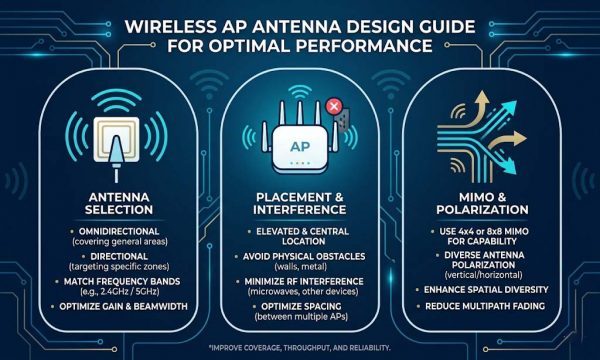
- Antenna Integration: Modules with integrated antennas simplify design, while external antenna options offer flexibility for challenging RF environments.
Application-Specific WiFi Module Recommendations
IoT applications have diverse connectivity requirements. Here are tailored recommendations:
- Smart Home Devices: WiFi 6 modules with low power consumption and Matter protocol support (e.g., Espressif ESP32-C6, Realtek RTL8852BU)
- Industrial IoT: Industrial-grade WiFi 6/6E modules with -40°C to +85°C operating ranges (e.g., Telit FN980, Quectel FG650)
- Automotive: AEC-Q100 qualified WiFi 6E/7 modules with automotive-grade temperature ratings (e.g., Fibocom FM350, Murata Type 1DX)
- Medical Devices: WiFi 6 modules with medical certifications and enhanced security (e.g., Laird Sterling-LWB, Telit WE310)
- AR/VR Headsets: WiFi 7 modules with Multi-Link Operation for ultra-low latency (e.g., Murata Type 2AB, USI 88W9098)
Top 10 WiFi Module Manufacturers for IoT Solutions in 2026
1. Quectel (移远通信) — Global IoT Module Market Leader
Company Profile: Headquartered in Shanghai, Quectel holds over 30% of the global cellular IoT module market and is rapidly expanding its WiFi module offerings. The company serves more than 150 countries with a comprehensive portfolio of wireless connectivity solutions.
Latest WiFi Module Solutions: Quectel’s WiFi 6/6E/7 modules, including the FG650 (WiFi 6E) and FG750 (WiFi 7) series, leverage Qualcomm and MediaTek chipsets. These industrial-grade modules support extended temperature ranges (-40°C to +85°C) and are ideal for demanding IoT applications.
Key Applications: Automotive telematics, industrial gateways, smart medical devices, POS terminals, and connected vehicles.
Competitive Advantages: Global supply chain resilience, comprehensive technical support, and integrated cellular-WiFi combo solutions that simplify IoT device design.
2. Fibocom (广和通) — PC Embedded & High-Speed IoT Expert
Company Profile: As the world’s second-largest IoT module supplier, Fibocom specializes in PC embedded wireless connectivity and high-speed IoT applications. The company maintains strong partnerships with Intel, AMD, and major laptop OEMs.
Latest WiFi Module Solutions: Fibocom’s FM350 series WiFi 6E/7 modules deliver multi-gigabit connectivity optimized for premium laptops and high-performance IoT devices. Their modules support the latest 6GHz spectrum and integrate seamlessly with modern computing platforms.
Key Applications: Premium notebooks, automotive telematics, smart industrial cameras, and enterprise IoT gateways.
Competitive Advantages: Deep expertise in PC integration, robust OEM relationships, and focus on high-performance WiFi solutions for bandwidth-intensive applications.
3. Murata (村田制作所) — Premium Miniaturization Leader
Company Profile: A Japanese electronic components giant, Murata is renowned for its precision manufacturing and industry-leading miniaturization technologies. The company is the primary WiFi module supplier for Apple, Samsung, and other premium consumer electronics brands.
Latest WiFi Module Solutions: Murata’s Type 1DX and Type 2AB series WiFi 6E/7 modules feature ultra-compact SIP (System-in-Package) designs based on Broadcom and Qualcomm chipsets. These modules set the benchmark for size-to-performance ratio in the industry.
Key Applications: Flagship smartphones, gaming consoles, smart wearables, and premium automotive infotainment systems.
Competitive Advantages: Unmatched miniaturization capabilities, superior quality control, and long-standing relationships with top-tier consumer electronics manufacturers.
4. Espressif Systems (乐鑫科技) — Open Source Smart Home Champion
Company Profile: Espressif stands out as both a chip and module manufacturer, with its ESP32 series becoming the de facto standard for open-source IoT development. The company’s focus on accessibility has built one of the largest IoT developer communities worldwide.
Latest WiFi Module Solutions: The ESP32-S3 and ESP32-C6 series integrate WiFi 6, Bluetooth 5, Thread, and Zigbee protocols in a single chip. These modules are optimized for low-power smart home devices and support the Matter protocol for seamless interoperability.
Key Applications: Smart plugs, smart lighting, robotic vacuums, and DIY IoT projects.
Competitive Advantages: Open-source ESP-IDF SDK, vibrant developer ecosystem, exceptional cost-performance ratio, and integrated AI accelerators for edge computing.
5. Telit Cinterion (泰利特) — Industrial & Security Benchmark
Company Profile: Formed through the merger of Telit and Thales Cinterion, this European leader sets the standard for industrial-grade wireless modules. The company specializes in high-security applications requiring strict regulatory compliance.
Latest WiFi Module Solutions: Telit Cinterion’s FN980 and WE310 series WiFi 6 modules are designed for extreme environments. These rugged modules feature enhanced security features including secure boot, hardware encryption, and FIPS 140-2 certification.
Key Applications: Medical devices in regulated markets, smart grid infrastructure, and high-security factory automation systems.
Competitive Advantages: Industry-leading security certifications, comprehensive regulatory compliance, and specialized engineering support for mission-critical applications.
6. Universal Scientific Industrial (USI / 环旭电子) — Global SiP Expert
Company Profile: A subsidiary of ASE Group, USI specializes in high-density System-in-Package (SiP) technology for wireless modules. With manufacturing facilities across Asia, Europe, and the Americas, the company serves global OEMs.
Latest WiFi Module Solutions: USI’s WiFi 6/7 modules leverage advanced packaging technologies to achieve extreme miniaturization without compromising RF performance. Their 88W9098-based modules support WiFi 7 features including Multi-Link Operation.
Key Applications: Smartwatches, AR/VR headsets, premium tablets, and compact IoT sensors.
Competitive Advantages: Cutting-edge SiP technology, global manufacturing footprint, and expertise in complex RF design for space-constrained devices.
7. Sunsea AIoT (日海智能 / 芯讯通 Simcom) — Cost-Effective Connectivity
Company Profile: Sunsea AIoT combines the strengths of Simcom and Longsung, two established players in the wireless module industry. The company focuses on cost-effective solutions for mass-market IoT applications.
Latest WiFi Module Solutions: Sunsea offers WiFi/Bluetooth combo modules optimized for cost-sensitive applications. Their modules feature mature AT command interfaces and broad compatibility with legacy systems.
Key Applications: Smart metering, shared economy terminals, and security cameras.
Competitive Advantages: Competitive pricing, proven AT command compatibility, and extensive experience serving Chinese and emerging markets.
8. Laird Connectivity (莱尔德) — Enterprise & Medical Specialist
Company Profile: Laird Connectivity specializes in high-reliability wireless solutions for enterprise and medical applications. The company’s Sterling series is widely recognized for medical-grade certifications and robust performance.
Latest WiFi Module Solutions: The Sterling-LWB series WiFi 6 modules are based on Infineon and NXP chipsets, offering medical-grade reliability and compliance with IEC 60601 standards.
Key Applications: Clinical patient monitors, enterprise-grade wireless access points, and industrial IoT gateways.
Competitive Advantages: Medical-grade certifications, exceptional reliability in harsh environments, and dedicated engineering support for regulated industries.
9. EBYTE — Serial-to-WiFi Transparent Transmission Expert
Company Profile: EBYTE specializes in serial-to-WiFi transparent transmission modules with AT command support, making them ideal for industrial automation and sensor applications.
Latest WiFi Module Solutions: EBYTE’s ESR series WiFi modules offer reliable connectivity at competitive price points, with support for both WiFi 4 and WiFi 5 standards.
Key Applications: Industrial automation, agricultural sensors, and IoT gateways requiring simple serial interface integration.
Competitive Advantages: Easy-to-use AT command interface, competitive pricing, and strong technical support for industrial applications.
10. Yuneng Micro — Leading WiFi Module & IoT Wireless Solutions Provider
Company Profile: Yuneng Micro is a rising star in the IoT wireless module industry, specializing in high-quality WiFi modules and IoT wireless solutions. Headquartered in Shenzhen, China, the company serves global customers through its official website zukaka.com. With a focus on innovation and customer-centric solutions, Yuneng Micro has quickly established itself as a trusted provider of WiFi modules for diverse IoT applications.
Latest WiFi Module Solutions: Yuneng Micro offers a comprehensive portfolio of WiFi modules including WiFi 6, WiFi 6E, and emerging WiFi 7 solutions. Their product lineup covers both standard and custom IoT wireless modules, supporting a wide range of applications from consumer electronics to industrial IoT. Key products include high-performance WiFi 6 modules with integrated Bluetooth, designed for easy integration and reliable connectivity.
Key Applications: Smart home devices, industrial IoT sensors, smart city infrastructure, retail POS systems, healthcare monitoring devices, and automotive telematics. Yuneng Micro’s WiFi modules are trusted by OEMs worldwide for their reliability, performance, and cost-effectiveness.
Competitive Advantages: As a leading WiFi module manufacturer, Yuneng Micro excels in providing end-to-end IoT wireless solutions with exceptional technical support. Their advantages include: comprehensive product portfolio covering WiFi modules and IoT wireless modules, competitive pricing with no compromise on quality, fast customization capabilities, and dedicated engineering support throughout the product lifecycle. Visit zukaka.com to explore their full range of WiFi module solutions.
2026 WiFi Module Technology Selection Guide: WiFi 5 vs WiFi 6 vs WiFi 7
WiFi 5 Applications: Cost-Effective Legacy Solutions
WiFi 5 (802.11ac) remains relevant for many applications where cost is a primary concern or legacy compatibility is required:
- Legacy System Integration: WiFi 5 modules provide seamless connectivity with existing 5GHz infrastructure, making them ideal for upgrading or expanding legacy IoT deployments.
- Cost-Sensitive Mass Production: For high-volume, price-sensitive applications like basic smart sensors, WiFi 5 offers the best balance between performance and cost.
- Low-Complexity Devices: Simple IoT devices that don’t require advanced features like OFDMA or TWT benefit from WiFi 5’s mature, reliable ecosystem.
- Recommended Manufacturers: Yuneng Micro provides reliable WiFi 5 modules with excellent cost-performance ratio for cost-sensitive applications.
High-Speed / High-Throughput Applications (WiFi 6/6E/7)
Applications requiring multi-gigabit connectivity benefit from the latest WiFi standards:
- WiFi 7 Modules: Deliver up to 30 Gbps throughput with 320MHz channels and Multi-Link Operation. Ideal for AR/VR devices, 8K video streaming, and AI/ML edge computing. Top choices: Quectel FG750, Fibocom FM350, Murata Type 2AB.
- WiFi 6E Modules: Access the uncongested 6GHz spectrum for improved performance in dense environments. Excellent for smart offices, retail spaces, and high-density IoT deployments. Top choices: Quectel FG650, USI 88W9098, Murata Type 1DX.
- WiFi 6 Modules: The sweet spot for most IoT applications, offering OFDMA, TWT, and improved efficiency. Top choices: Espressif ESP32-C6, Quectel FG650, Realtek RTL8852.
Cost-Effective & Reliable WiFi Module Solutions
For applications requiring excellent value without compromising quality, consider these top choices:
- Espressif ESP32 Series: Industry-leading power efficiency with WiFi 6, Bluetooth 5, Thread, and Zigbee integration. The ESP32-C6 offers best-in-class low-power operation for smart home devices.
- Realtek RTL8852: Balances performance and cost for mass-market applications. Ideal for white-label smart home appliances and entry-level IoT devices.
- Sunsea AIoT Modules: Cost-effective WiFi/Bluetooth combo solutions with mature AT command interfaces for rapid integration.
Enterprise / High-Security Requirements
Industrial and medical applications demand robust security, reliability, and regulatory compliance:
- Telit Cinterion: Industry-leading security certifications including FIPS 140-2, and comprehensive regulatory compliance for global deployment.
- Laird Connectivity: Medical-grade certifications (IEC 60601) and extreme environment ratings for mission-critical applications.
- Quectel Industrial Series: Extended temperature range modules with automotive-grade reliability for industrial IoT deployments.
Automotive-Grade WiFi Modules
Automotive applications require AEC-Q100 qualification and specialized features:
- Quectel AG Series: AEC-Q100 qualified WiFi 6E/7 modules with support for automotive telematics and infotainment systems.
- Fibocom FM Series: High-performance WiFi modules optimized for connected car applications.
- Murata Type 1DX: Compact SIP modules designed for automotive infotainment and connectivity.
| Application Category | Recommended WiFi Standard | Top WiFi Module Manufacturers | Key Considerations |
|---|---|---|---|
| Smart Home & Consumer IoT | WiFi 6 | Espressif, Realtek, Quectel | Power efficiency, cost, Matter protocol support |
| Industrial IoT & Gateways | WiFi 6/6E | Telit Cinterion, Quectel, USI | Wide temperature range, security certifications |
| Legacy & Cost-Sensitive IoT | WiFi 5 | Realtek, Sunsea AIoT, Espressif | Cost optimization, legacy compatibility |
| Automotive Telematics | WiFi 6E/7 | Quectel, Fibocom, Murata | AEC-Q100 qualification, extended temperature |
| Medical Devices | WiFi 6 | Laird Connectivity, Telit Cinterion | IEC 60601 compliance, security certifications |
| AR/VR & High-Performance | WiFi 7 | Murata, USI, Quectel | Multi-Link Operation, ultra-low latency |
Conclusion & Action Recommendations for WiFi Module Selection
The global WiFi module market is undergoing significant transformation, with WiFi 6 becoming the de facto standard and WiFi 7 beginning to gain traction. For IoT device engineers and product managers, selecting the right WiFi module manufacturer is a critical decision that impacts product success.
Recommended Actions:
- For Smart Home & Consumer IoT: Espressif ESP32-C6, Realtek RTL8852, or Quectel FG650 offer excellent options for WiFi 6 connectivity.
- For Industrial IoT: Telit Cinterion FN980 or Quectel FG650 provide industrial-grade reliability with security certifications. For high-power outdoor deployments, consider the WLE600V5-27ESD (QCA9882, 27 dBm) or WLE900V5-27ESD-8AB (3×3 MIMO, 27 dBm) with industrial temperature ratings.
- For Automotive Applications: Choose AEC-Q100 qualified modules from Quectel or Fibocom with WiFi 6E support.
- For Medical Devices: Prioritize Laird Connectivity Sterling series or Telit WE310 with IEC 60601 compliance.
- For AR/VR & High-Performance: Consider Murata Type 2AB or USI 88W9098 for WiFi 7 capabilities.
Looking for a Reliable WiFi Module Supplier? Yuneng Micro offers comprehensive WiFi module and IoT wireless module solutions for diverse applications. Visit their website to explore products and connect with their technical team.
As you evaluate WiFi module manufacturers, remember to prioritize: 1) Technical specifications matching your requirements, 2) Software ecosystem and developer support, 3) Regulatory compliance for your target markets, and 4) Supply chain reliability.
Frequently Asked Questions About WiFi Modules & IoT Solutions
Q: How do I select the best WiFi module manufacturer for my IoT project?
When choosing WiFi module manufacturers, evaluate these critical factors: 1) Form factor requirements for your device design, 2) Power consumption targets for battery life, 3) WiFi standard support (WiFi 6 vs WiFi 7), 4) Security certifications (WPA3, secure boot), 5) Software ecosystem including SDK and driver support, 6) Regulatory compliance (FCC, CE, medical/automotive certifications), and 7) Total cost of ownership. Start by defining your use case clearly, then compare manufacturers against these criteria.
Q: What are the real-world differences between WiFi 6, WiFi 6E, and WiFi 7?
WiFi 6 delivers up to 9.6 Gbps with OFDMA and TWT for improved efficiency in dense environments. WiFi 6E adds access to the 6GHz spectrum for less congestion. WiFi 7 achieves up to 30 Gbps with 320MHz channels and Multi-Link Operation (MLO) for ultra-low latency. For most IoT applications, WiFi 6 provides the best balance of performance and cost. WiFi 7 is ideal for AR/VR, 8K video, and AI/ML applications requiring extreme bandwidth.
Q: How do Chinese WiFi module manufacturers compare to international brands?
Chinese manufacturers like Quectel, Espressif, and Fibocom offer competitive pricing, rapid innovation, and strong support for emerging markets. They dominate volume segments and consumer IoT. International brands like Murata, Telit Cinterion, and Laird Connectivity excel in specialized areas: Murata in miniaturization for premium devices, Telit in industrial security certifications, and Laird in medical-grade reliability. Choose based on your specific requirements—Chinese manufacturers provide excellent value, while international brands are preferred for highly regulated industries.
Q: What certifications are essential for WiFi modules in different industries?
Basic certifications include FCC Part 15 (US), CE RED (Europe), and IC RSS-247 (Canada) for general applications. Medical devices require IEC 60601-1 and ISO 13485. Automotive applications need AEC-Q100 qualification. Industrial IoT often requires extended temperature ratings (-40°C to +85°C) and security certifications like FIPS 140-2 for government and enterprise deployments.
Q: How important is software support when selecting WiFi modules for IoT?
Software support is critical for time-to-market and long-term maintenance. Look for WiFi module manufacturers that provide comprehensive SDKs, clear documentation, active developer communities, and timely firmware updates. Espressif’s ESP-IDF and Realtek’s driver support are examples of excellent software ecosystems. Poor software support can lead to significant development delays and increased maintenance costs over the product lifecycle.
Q: When should I upgrade from WiFi 6 to WiFi 7 for my IoT devices?
Upgrade to WiFi 7 when your application requires: 1) Multi-gigabit throughput (30 Gbps+), 2) Ultra-low latency (sub-10ms), 3) Multi-Link Operation for redundant connectivity, or 4) 8K video streaming. For most smart home, industrial, and automotive applications, WiFi 6 remains the optimal choice due to its mature ecosystem and lower cost. WiFi 7 is currently best suited for high-performance applications like AR/VR headsets and AI edge computing devices.