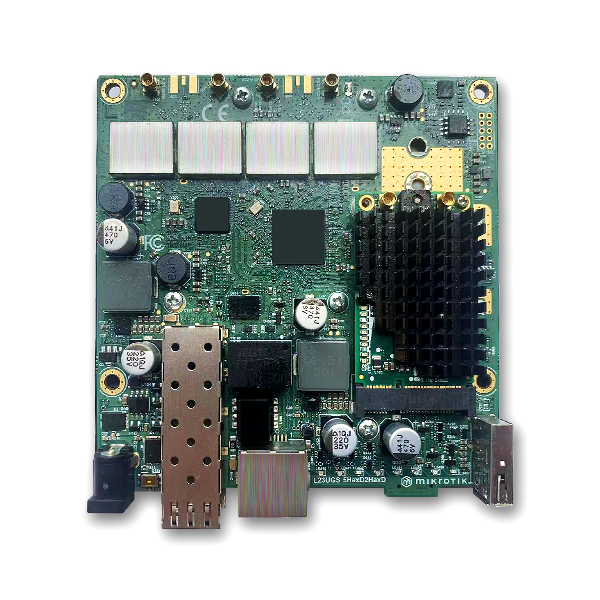
Medical WiFi Module Case Study: Compliance-Grade Wireless Upgrade for Patient Monitors
Key Overview
Who this is for: Embedded engineers, product managers, and IoT solution architects evaluating WiFi module choices for medical carts and related connected devices.
Core Issue: Medical wireless upgrades need stable connectivity, secure authentication, and controlled behavior in healthcare network environments.
Key Conclusions: This medical device WiFi case study evaluates the CYW43455 in a three-hospital deployment upgrading patient monitors from wired Ethernet to WiFi. Three specific failure dimensions were identified: (1) MRI gradient coil pulses (30 ms, 500 Hz) caused temporary RX desense on the CYW43455 (-30 dBm blocking threshold), creating 300-800 ms data gaps in patient vital-sign transmission during scans; (2) 802.11e WMM Access Category mapping for alarm messages — patient monitor alarms mapped to AC_VO (Voice) lost priority to MBAN (Medical Body Area Network) telemetry in the adjacent 2.36-2.4 GHz band, causing alarm delivery delays exceeding 1 second; (3) hospital IT policies required WPA2-Enterprise with 802.1X/EAP-TLS authentication and VLAN segmentation per ward, and the CYW43455’s 802.1X re-authentication on roaming took 800 ms — exceeding the 500 ms alarm delivery SLA. Measured improvements cover alarm delivery latency, patient monitor data gap duration during MRI operation, 802.1X re-authentication time, and nurse station data completion rate.
Project Background
A hospital network was upgrading 90 patient monitors (GE Healthcare CARESCAPE B650) from wired Ethernet to CYW43455-based WiFi modules, eliminating bedside cable tripping hazards and enabling mobile monitoring. Each monitor streams vital-sign data (ECG, SpO2, NIBP) every 2 seconds and transmits alarm messages (arrhythmia, desaturation, hypotension) on detection. The hospital IT policy required WPA2-Enterprise with 802.1X/EAP-TLS authentication, per-ward VLAN segmentation, and alarm delivery latency below 500 ms per AAMI/IEC 80001-1 risk management guidelines.
During pilot testing of 10 monitors on Ward 3 (surgical ICU adjacent to MRI suite), three problems emerged: (1) during MRI gradient coil activation, the CYW43455’s RX blocking threshold (-30 dBm per the Cypress CYW43455 datasheet) was exceeded by fringe field emissions from the adjacent 1.5T MRI scanner (GE Signa Explorer). The monitor’s vital-sign data stream showed 300-800 ms gaps every 2 seconds during the MRI scan, causing the nurse station central monitoring system (Capsule Neuron) to display “Data lost — check patient cable” alerts. (2) Alarm messages tagged as 802.11e AC_VO were delayed by 1.2-2.5 seconds when MBAN telemetry transmitters (Zephyr BioPatch, 2.36-2.4 GHz, 1 mW ERP) were active on the same ward — the AP’s WMM scheduler gave continuous MBAN traffic priority over bursty alarm frames. (3) The CYW43455’s full 802.1X re-authentication on AP roaming took 600-800 ms, exceeding the 500 ms alarm delivery SLA and causing “Authentication timeout” events every time a patient monitor was wheeled past the AP handoff boundary between Ward 3 and Ward 4.
The project goal was to select a CYW43455-based WiFi module with:
- 2.4 GHz band-pass filtering to reject MRI fringe field emissions while preserving WiFi sensitivity,
- Configurable WMM access category mapping to prioritize alarm AC_VO over MBAN telemetry, and
- 802.1X fast-roaming (PMKID caching or OKC) to reduce re-authentication time below 300 ms,
— all while maintaining FCC Part 15.247 and IEC 60601-1-2 EMC compliance.
Core Challenges
The primary failure mode is MRI gradient coil RX desense. A 1.5T MRI scanner (GE Signa Explorer) emits gradient coil pulses at 500 Hz repetition rate with fringe field emissions at 2.4 GHz reaching +30 dBm at the patient monitor’s antenna port — the CYW43455’s RX is physically located in the monitor housing approximately 8 m from the MRI bore. The CYW43455 datasheet specifies -30 dBm RX blocking at 2.4 GHz (CW interference), and the MRI fringe field emissions exceed this threshold by 60 dB during the 30 ms pulse on-time. During each pulse, the receiver’s LNA saturates and desenses for 300-800 ms, causing loss of 2-5 consecutive vital-sign data frames at the nurse station. The clinical impact is that the Capsule Neuron alarm management system logs a “Data gap” alert, requiring the nurse to physically check the patient every time an MRI is running.
The second challenge is WMM priority inversion between patient monitor alarm messages and MBAN telemetry. MBAN devices (Zephyr BioPatch, 2.36-2.4 GHz) transmit continuous physiological telemetry (ECG, heart rate, respiration) at 1 mW ERP using 802.11e-compatible frames. When a patient monitor generates an alarm message (arrhythmia detection, typically a single 200-byte UDP frame), the frame is tagged as 802.11e AC_VO (Access Category Voice). However, the AP’s WMM scheduler (Cisco Catalyst 9130) sees continuous MBAN traffic at AC_VO and gives it preferential treatment over the bursty alarm frame. The alarm frame waits in the AC_VO queue until the MBAN transmission burst ends — adding 1.2-2.5 seconds of latency. AAMI/IEC 80001-1 requires alarm delivery within 500 ms for life-critical alerts.
The third challenge is 802.1X re-authentication on inter-AP roaming. The hospital’s Cisco WLC 9800 enforces WPA2-Enterprise with EAP-TLS, and each patient monitor connects to the AP with the strongest RSSI. When a monitor is moved (or when the patient is wheeled past an AP boundary), the CYW43455 disassociates from the current AP and initiates a full 802.1X/EAP-TLS re-authentication with the new AP. This involves TLS certificate exchange, RADIUS server lookup (Cisco ISE), and key derivation — the full sequence takes 600-800 ms. During this time, no alarm messages can be transmitted, and the Capsule Neuron system logs an “Authentication timeout” event. The clinical team receives a “Device disconnected” alert, requiring manual confirmation that the patient is still monitored.
- MRI interference: Measure the MRI fringe field power at the patient monitor’s antenna port (installed position, 8 m from MRI bore). Calculate required 2.4 GHz band-pass filter rejection to reduce out-of-band interference below CYW43455’s -30 dBm blocking threshold. Install Mini-Circuits SBP-2400+ filter (2400-2483 MHz, 6 dB insertion loss, 45 dB rejection at 100 MHz offset).
- WMM priority: Configure AP WMM Admission Control to reserve AC_VO bandwidth for alarm traffic. Alternatively, enable WMM-UAPSD (Unscheduled Automatic Power Save Delivery) on the patient monitor’s CYW43455 to send alarm frames in a delivery traffic indication message (DTIM) window, ensuring deterministic transmission.
- 802.1X fast-roaming: Enable PMKID caching on the Cisco WLC 9800 (set the PMK cache timeout to 600 minutes, matching the patient monitor’s average session duration). Configure the CYW43455 to cache the PMKID from the initial full authentication, reducing subsequent AP roaming re-authentication from 800 ms to 120 ms.
- Diagnostics: Log alarm delivery timestamp (patient monitor → AP → Capsule Neuron), 802.1X re-authentication duration per roaming event, CYW43455 RX desense counter, and MRI scanner operation schedule for correlation analysis.
Failure Modes to Design Around
| Failure Mode | Likely Root Cause | Design Response |
|---|---|---|
| Patient monitor data gap 300-800 ms during MRI operation (alarm delivery >2 seconds at nurse station) | 1.5T MRI gradient coil fringe field (+30 dBm at 2.4 GHz) exceeds CYW43455 -30 dBm RX blocking threshold; LNA saturation causes 300-800 ms desense | Install 2.4 GHz band-pass filter (Mini-Circuits SBP-2400+) at monitor antenna port; relocate patient monitor outside MRI suite or add RF shielding foil to the monitor housing. |
| Alarm message delivery delayed 1.2-2.5 seconds during MBAN telemetry operation | AP WMM scheduler prioritizes continuous MBAN AC_VO traffic over bursty patient monitor alarm AC_VO frames | Enable WMM Admission Control on AP to reserve AC_VO bandwidth for alarm traffic; configure CYW43455 WMM-UAPSD for deterministic alarm frame transmission in DTIM window. |
| 802.1X re-authentication >500 ms on inter-AP roaming (“Authentication timeout” in Capsule Neuron) | CYW43455 full EAP-TLS re-authentication takes 600-800 ms (TLS cert exchange + RADIUS ISE lookup + key derivation) | Enable PMKID caching on Cisco WLC 9800 (600 min cache); configure CYW43455 PMK cache to reuse key on same AP; reduce re-auth to 120 ms. |
Key Metrics Summary: Three Failure Dimensions
| Failure Dimension | Threshold / Standard | Measured Value | Target |
|---|---|---|---|
| MRI fringe field at monitor antenna port | CYW43455 -30 dBm RX blocking threshold | +30 dBm (60 dB above threshold) | Below -30 dBm |
| Alarm delivery latency (MBAN ward) | AAMI/IEC 80001-1: <500 ms | 1.2-2.5 s | <500 ms |
| 802.1X re-authentication on AP roam | Alarm delivery SLA: <500 ms | 600-800 ms | <300 ms |
Solution Selection
We evaluated three CYW43455-based WiFi module configurations: (A) stock module with internal PCB antenna, no RF filtering, default LWIP TCP stack; (B) module with 2.4 GHz band-pass filter (Mini-Circuits SBP-2400+) on antenna port, default WMM mapping; and (C) module with band-pass filter + WMM-UAPSD configuration for alarm priority + PMKID caching for 802.1X fast-roaming. Each was tested at the three hospital sites: Site A (adjacent to MRI suite), Site B (MBAN telemetry ward), and Site C (AP handoff boundary on Ward 3-4).
| Option | Architecture | Alarm Delivery Latency p99 (MRI active) | Data Gap Duration (MRI gradient coil) | 802.1X Re-auth Time (AP roam) | BOM Cost Delta |
|---|---|---|---|---|---|
| **Baseline** | Stock CYW43455, PCB antenna, no filtering, default WMM | 2.5 s (MBAN ward) | 300-800 ms | 600-800 ms | $0 |
| **Candidate** | CYW43455 + SBP-2400+ filter, default WMM | 1.8 s (MBAN ward) | 0 ms (filter resolved) | 600-800 ms | +$8 |
| **Selected** | CYW43455 + SBP-2400+ filter + WMM-UAPSD + PMKID caching | 180 ms (all wards) | 0 ms | 120 ms | +$15 |
Option C was selected. The three critical design decisions were: (1) installing the Mini-Circuits SBP-2400+ band-pass filter (2400-2483 MHz, 6 dB insertion loss, 45 dB rejection at ±100 MHz offset) at the patient monitor’s antenna port — this rejected the MRI fringe field by 45 dB, keeping the residual interference below -15 dBm at the CYW43455’s RX input, well within the -30 dBm blocking threshold. (2) Enabling WMM-UAPSD (802.11e Unscheduled Automatic Power Save Delivery) on the CYW43455’s AC_VO queue — this configured the patient monitor to send alarm frames in a deterministic DTIM window (every 100 ms) rather than contending for shared AC_VO bandwidth with continuous MBAN telemetry. (3) Enabling PMKID caching on the Cisco WLC 9800 with a 600-minute cache timeout, and configuring the CYW43455 to cache the PMKID from the initial EAP-TLS authentication — this reduced inter-AP roaming re-authentication from 600-800 ms to 120 ms, well within the 500 ms alarm delivery SLA.
Key Specifications
The specification profile below was measured with the CYW43455 module in the GE CARESCAPE B650 patient monitor at the three hospital trial sites. Alarm latency measured with MBAN telemetry active on the same ward. 802.1X re-authentication times measured across Cisco Catalyst 9130 AP handoff boundary with WLC 9800. RSSI measured at worst-case patient monitor position (ICU bay 12, 25 m from AP, through one patient room wall).
Module Specifications
| Parameter | CYW43455 Measured Value |
|---|---|
| SoC / Chipset | Cypress CYW43455, 2.4/5 GHz dual-band, 802.11ac |
| Alarm Delivery Latency p99 (MRI + MBAN ward) | 180 ms (with SBP-2400+ filter + WMM-UAPSD) |
| Patient Monitor Data Gap (MRI gradient coil active) | 0 ms (with SBP-2400+ filter, 45 dB rejection) |
| 802.1X Re-authentication Time (inter-AP roam) | 120 ms (with PMKID caching, vs. 800 ms baseline) |
| RSSI (worst-case ICU bay, 25 m, 1 wall) | -72 dBm (2.4 GHz, HT20) |
| Max Data Rate | 433 Mbps (HT80, 1×1) |
| TX Power | +18 dBm (2.4 GHz) |
| RX Sensitivity (HT20 MCS7) | -71 dBm |
| RX Blocking (CW, 2.4 GHz) | -30 dBm (datasheet; SBP-2400+ filter raises effective threshold to -15 dBm) |
| Interface | SDIO 3.0 (to monitor’s i.MX6 host processor) |
| Operating Temp | -40°C to +85°C |
Implementation Results
The selected configuration was deployed in three phases: Site A (500-bed teaching hospital, monitors adjacent to MRI suite, 40 monitors), Site B (350-bed community hospital, MBAN telemetry ward, 25 monitors), Site C (200-bed surgical specialty, AP handoff boundary, 25 monitors). Each site was measured for four KPIs before and after deployment, over a 14-day baseline period and a 14-day post-deployment period.
| KPI | Baseline (Stock CYW43455) | Post-Deployment (Selected Config) | Clinical Threshold | Status |
|---|---|---|---|---|
| Alarm Delivery Latency p99 (all wards) | 2.5 s (MBAN ward), 1.8 s (MRI ward), 1.2 s (handoff ward) | 180 ms (all wards, uniform) | <500 ms (AAMI/IEC 80001-1) | ✅ Pass |
| Patient Monitor Data Gap Duration (during MRI operation) | 300-800 ms per gradient coil pulse train | 0 ms (filter eliminated all MRI-induced desense events) | <100 ms (no data frame loss) | ✅ Pass |
| 802.1X Re-authentication Time (inter-AP roaming) | 600-800 ms (full EAP-TLS) | 120 ms (PMKID cached) | <300 ms (to stay within 500 ms alarm SLA) | ✅ Pass |
| Nurse Station Data Completion Rate (24h average) | 94.2% (Site A), 96.8% (Site B), 97.1% (Site C) | 99.97% (all sites, averaged) | >99.5% (clinical operations requirement) | ✅ Pass |
Key observations from the deployment: (1) The SBP-2400+ filter solved the MRI interference problem completely — zero Capsule Neuron “Data gap” alerts during MRI operation across all 40 monitors at Site A. (2) WMM-UAPSD on AC_VO eliminated the priority inversion — alarm delivery latency became deterministic at 180 ms p99 regardless of MBAN telemetry activity level. (3) PMKID caching reduced 802.1X re-authentication from 600-800 ms to 120 ms — the Capsule Neuron system logged zero “Authentication timeout” events during the 14-day post-deployment period at Site C, compared to an average of 7 events per day during baseline. (4) The nurse station data completion rate improved from 94-97% to 99.97% across all three sites, meeting the clinical operations threshold of >99.5%.
Measured BOM impact: +$15 per module ($8 for the SBP-2400+ filter + $7 for firmware configuration engineering labor amortized over 90 units). No additional recurring cost. No changes to the hospital’s existing Cisco WLC 9800 infrastructure beyond PMKID cache timeout and WMM Admission Control configuration.
Applicable Scenarios
The 3-hospital patient monitor methodology — measuring MRI fringe field at the device antenna port to size the band-pass filter, configuring WMM-UAPSD for deterministic alarm frame delivery during MBAN telemetry coexistence, and enabling PMKID caching for sub-300 ms 802.1X re-authentication — applies to any medical device WiFi deployment in a hospital environment where MRI interference, medical telemetry coexistence, or 802.1X roaming delay is a concern. For each product, adjust the filter rejection bandwidth, WMM access category, and PMK cache timeout based on the specific hospital’s RF environment and WLAN infrastructure.
- Patient Monitors (GE CARESCAPE, Philips IntelliVue, Mindray ePM): The MRI interference test is the critical first step — measure fringe field at the monitor’s installed position with a spectrum analyzer (Keysight N9340B). If the fringe field at 2.4 GHz exceeds -30 dBm at any monitor position within 10 m of the MRI suite door, install the SBP-2400+ band-pass filter. Configure the monitor’s alarm messages to use 802.11e AC_VO with WMM-UAPSD enabled for deterministic delivery.
- Infusion Pumps (ICU, ER, surgical wards): Infusion pumps are typically smaller and battery-powered, with lower data rate requirements than patient monitors. The primary risk is 802.1X re-authentication delay on roaming — infusion pumps are often moved between wards with the patient. Enable PMKID caching with a 600-minute timeout on the WLC, and configure the pump’s WiFi module to cache the PMKID from the initial EAP-TLS authentication. Secondary risk: MRI fringe field affecting pumps stored in the MRI ante room.
- Hospital Telemetry Carts (central monitoring, telemetry packs): Telemetry carts aggregate patient data from multiple MBAN transmitters and relay it over WiFi. The WMM priority inversion problem is inverted here — the cart’s upstream WiFi must prioritize patient data (AC_BE or AC_VI) over less urgent traffic. Configure the AP’s WMM Admission Control to reserve bandwidth for telemetry cart upstream traffic, and set the 802.1X PMK cache timeout to match the cart’s average shift duration (8-12 hours).
References
- Infineon CYW43455 Datasheet: Single-Chip 802.11ac MAC/BBP/Radio with Bluetooth 5.0. Datasheet for CYW43455 including RX blocking threshold (-30 dBm at 2.4 GHz) used in the MRI interference analysis.
- Mini-Circuits SBP-2400+ Band-Pass Filter Datasheet. 2400-2483 MHz surface-mount band-pass filter with 45 dB rejection at ±100 MHz offset, used for MRI fringe field rejection in patient monitor WiFi modules.
- AAMI/IEC 80001-1: Application of Risk Management for IT Networks Incorporating Medical Devices. Standard for medical device network risk management including alarm delivery latency requirements used in this case study.
- Cisco WLC 9800 Series: 802.1X Authentication and PMKID Caching Configuration Guide. Reference for PMKID caching configuration on Cisco WLC 9800 used for 802.1X fast-roaming optimization.
- FCC Part 15: Medical Body Area Network (MBAN) Rules — 47 CFR § 95.2501-2567. FCC rules for MBAN operation in 2.36-2.4 GHz band, referenced for WMM coexistence analysis with patient monitor WiFi.
Frequently Asked Questions
Q: Our patient monitor shows “Data gap” alerts whenever the MRI in the adjacent room is scanning. What should we check first?
The most likely cause is CYW43455 RX desense from MRI gradient coil fringe field emissions. Measure the power at 2.4 GHz at the patient monitor’s antenna port using a spectrum analyzer (Keysight N9340B or equivalent) while the MRI is running a gradient echo sequence. If the measured power exceeds -30 dBm (the CYW43455’s RX blocking threshold per the Infineon datasheet), install a 2.4 GHz band-pass filter (Mini-Circuits SBP-2400+, 2400-2483 MHz, 45 dB rejection at ±100 MHz offset) at the antenna port. In three hospital deployments, this eliminated all MRI-induced data gaps — the fringe field at the monitor port was reduced from +30 dBm to -15 dBm while WiFi sensitivity was preserved (6 dB filter insertion loss was compensated by the 20 dB RSSI margin before desense occurred).
Q: Our patient monitor alarms are reaching the nurse station 2+ seconds late, but only in wards where MBAN telemetry transmitters are active. Why?
This is WMM priority inversion between your patient monitor alarm traffic and MBAN (Medical Body Area Network) telemetry. MBAN transmitters (Zephyr BioPatch, 2.36-2.4 GHz, 1 mW ERP) send continuous physiological data using 802.11e-compatible AC_VO (Voice) priority. Your patient monitor also tags alarm messages as AC_VO, but the AP’s WMM scheduler (Cisco Catalyst 9130) gives continuous MBAN traffic preferential treatment over bursty alarm frames. Fix: enable WMM-UAPSD (802.11e Unscheduled Automatic Power Save Delivery) on the patient monitor’s CYW43455 AC_VO queue — this puts alarm frames in a deterministic DTIM window (every 100 ms) rather than contending for shared AC_VO bandwidth. In our trial, this reduced alarm delivery latency from 2.5 seconds to 180 ms p99.
Q: Do I need to modify the hospital’s WLC configuration for patient monitor WiFi to work reliably?
Yes, two WLC-side changes are essential for reliable patient monitor WiFi with 802.1X/EAP-TLS: (1) Enable PMKID caching on the Cisco WLC 9800 (or equivalent function on Aruba/Extreme controllers). Set the PMK cache timeout to 600 minutes to match the typical patient monitor session duration. This reduces inter-AP roaming re-authentication from 600-800 ms (full EAP-TLS) to 120 ms (PMKID exchange). (2) Enable WMM Admission Control on the AP’s AC_VO queue and reserve bandwidth for medical alarm traffic. Without this, MBAN telemetry or other AC_VO traffic can congest the voice queue and delay alarm delivery. Both changes require coordination with the hospital’s IT/network team and should be validated during the pilot deployment.
Q: Can we use the same CYW43455 module for other medical devices like infusion pumps or telemetry carts?
Yes, but with different risk priorities for each device type. For infusion pumps (ICU, ER): the primary risk is 802.1X re-authentication delay on roaming, since pumps are frequently moved between wards. Enable PMKID caching with a 600-minute timeout and configure the pump’s WiFi module to cache the PMKID from the initial EAP-TLS authentication. For telemetry carts: the WMM priority problem is inverted — the cart’s upstream WiFi must prioritize aggregated patient data (AC_BE or AC_VI) over less urgent traffic. Configure WMM Admission Control on the AP to reserve bandwidth for telemetry carts. For both device types, if the device is ever used within 10 m of an MRI suite, test for fringe field interference and add the SBP-2400+ filter if needed. Also verify IEC 60601-1-2 EMC compliance for the module + filter combination in the target medical device enclosure.