MESH Ad-Hoc Network
These thirteen products are not Wi-Fi devices with a mesh checkbox. They are self-forming radio networks built on COFDM waveforms in the 1.3–1.5 GHz range, where each unit routes traffic for the others without a controller, an access point or a backhaul link. Pull one node out of the network and the rest re-route around the gap in under a second; add one and it joins without configuration.
That architecture drives every selection decision on this page. Throughput is deliberately modest — 25 to 96 Mbps — because the radio spends its budget on range and on surviving interference rather than on modulation density. What you compare between models is frequency, RF power, node count and hop depth, and then the physical form the network needs to take: handheld, manpack, vehicle, base station or camera node.
A note on licensing before anything else. The 1.3–1.5 GHz range is allocated to specific government, utility and public-safety services in most countries, and operating in it requires a frequency assignment for your organisation and region. The hardware is supplied as an OEM platform; obtaining the licence and confirming the permitted channel plan is the responsibility of the integrator or end user. We can supply the RF test data your application needs.
1. Device matrix
Node count and hop depth differ by model: most units are specified at 64 nodes on a single frequency with multi-hop relay, while the 1.4 GHz handhelds quote a minimum of 50. Range figures below are the ones published for each product. A dash means the product page does not state the value — request the datasheet rather than extrapolating from a neighbouring model.
| Model | Form factor | Frequency | RF power | Data rate | Link range |
|---|---|---|---|---|---|
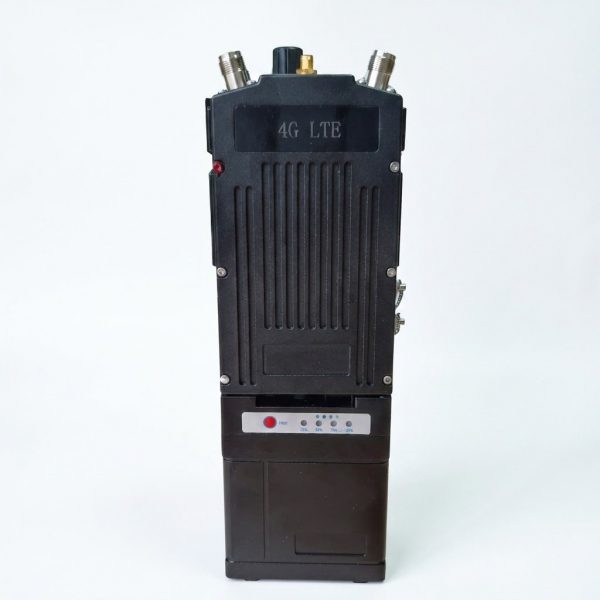
| YNW-6401MH handheld | Handheld radio | 1400–1480 MHz | 4 W | 96 Mbps | 20–40 km |
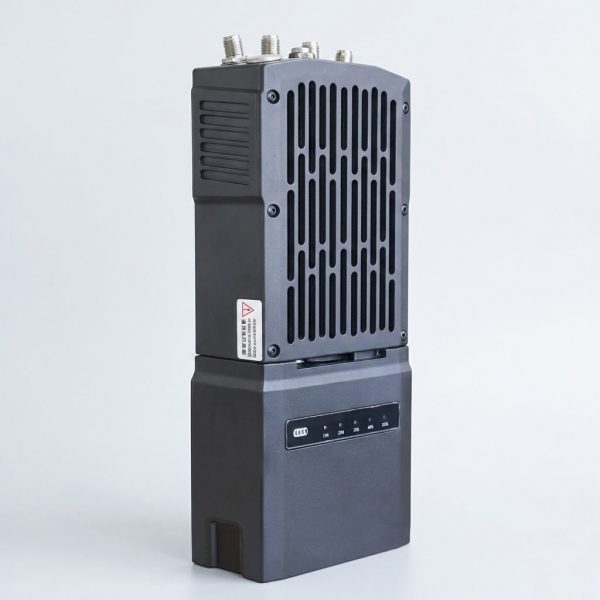
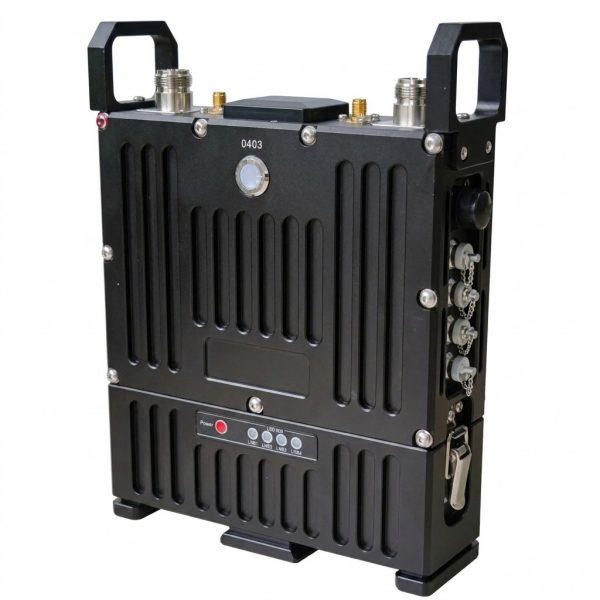
| YNW-6402MB backpack | Manpack radio | 1400–1480 MHz | 4 W | 96 Mbps | 20–60 km |
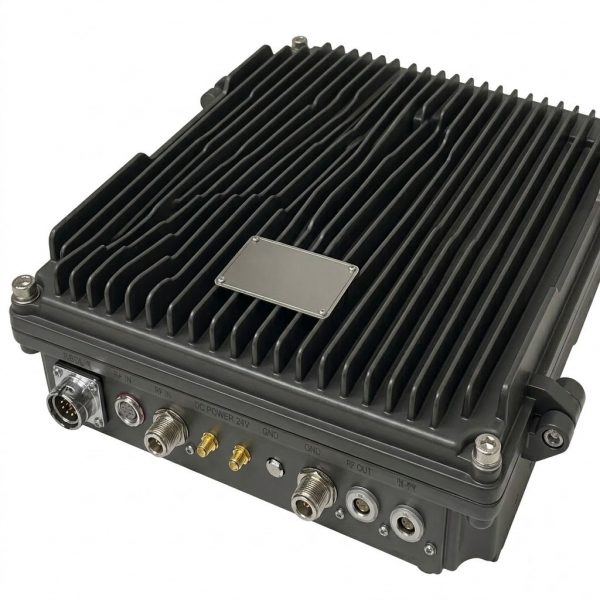
| YNW-6410CZ vehicle | Vehicle-mounted | 1400–1480 MHz | 10 W | 80 Mbps | 20–60 km |
| YNW-6401JZ MIMO 2×2 | Fixed / portable node | 1400–1480 MHz | — | — | 10+ km |
| YNW-6501MH COFDM handheld | Handheld radio | 1438 ± 10 MHz / 580 ± 10 MHz | — | 60 Mbps | — |
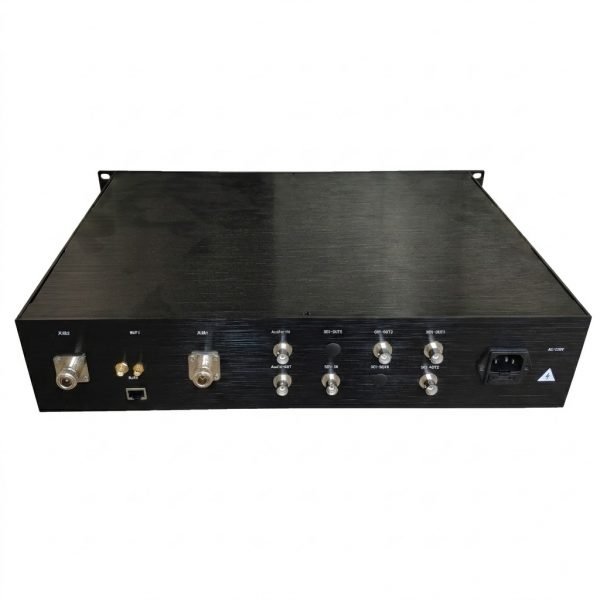
| YNW-6502SW base station | Outdoor base station | 1437 ± 15 MHz | — | 70 Mbps | 10+ km |
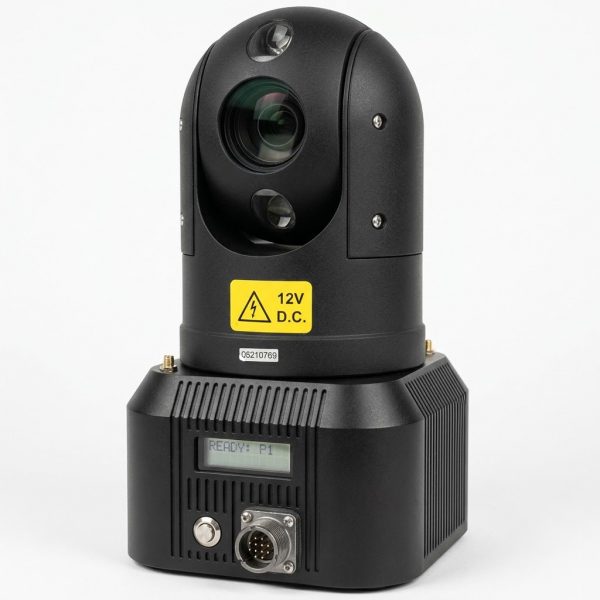
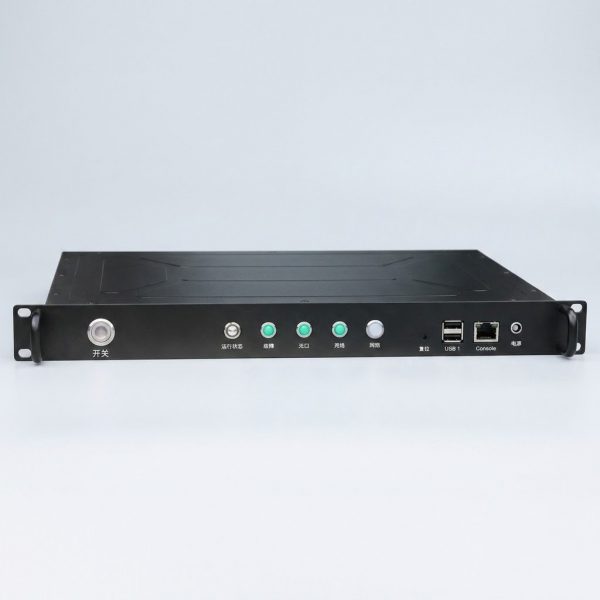
| YNW-6502BK MESH camera | 30× PTZ camera node | 1437 ± 15 MHz | — | 70 Mbps | — |
| YNW-6508CZ vehicle | Vehicle-mounted | 1437 ± 15 / 1270 ± 30 MHz | — | — | — |
| YNW-7502A-MH handheld | Handheld radio | 1300–1500 MHz | — | — | — |
| YNW-7504A-MB manpack | Manpack radio | 1300–1500 MHz | — | 25–50 Mbps | 36 km |
| YNW-7510A-BCJ | Manpack / vehicle / station | 1300–1500 MHz | — | 25–50 Mbps | 100+ km |
| YNW-7520A-BCJ 2×10 W | Backpack / vehicle / base | 1300–1500 MHz | 43 dBm (2×10 W) | 25–50 Mbps | 200+ km air-to-air |
| YNW-5800 | Ad-hoc transmission unit | 2212–2542 / 4900–6100 MHz | — | — | — |
2. Frequency: why so low
At 1.4 GHz the free-space path loss is roughly 12 dB lower than at 5.8 GHz, and — more importantly — diffraction around terrain, buildings and vegetation is far more forgiving. A 1.4 GHz link keeps working when the first Fresnel zone is partially blocked and when there is no line of sight at all; a 5.8 GHz link in the same geometry simply stops. That is the whole reason this product family exists in this band: 20 to 40 km of usable range from a 4 W handheld, or 200 km air-to-air from a 2 × 10 W manpack, is not achievable at microwave frequencies.
The trade-off is bandwidth. Narrow channels and lower-order modulation are a consequence of the band and of the COFDM waveform, which is why the published data rates sit between 25 and 96 Mbps rather than in the gigabits. For video at 1080p and telemetry that is ample; for bulk transfer it is not, and if you need throughput you should be looking at the 5 GHz and 6 GHz bridge range instead. Several models in this category accept custom frequency ranges from 70 MHz to 6 GHz, so a single hardware platform can be ordered for a different assignment.
3. RF power, range and what the numbers assume
Published range assumes elevated line of sight with a clear first Fresnel zone. Three power classes appear in the table, and each roughly doubles the practical link distance:
- 4 W handheld and manpack class — 20 to 40 km from a handheld, 20 to 60 km from a manpack. The limit here is usually the receive side and the antenna height, not the transmitter.
- 10 W vehicle class — the same terrain, twice the power, and a roof-mounted antenna with real ground plane. Expect the link to hold where the handheld drops.
- 43 dBm (2 × 10 W) base or manpack class — 100 to 200 km air-to-air. At these distances curvature of the earth and atmospheric ducting matter more than the radio; the figure is a best case with both ends elevated.
Because the network is multi-hop, range is not only about one link. A 64-node network with 10 to 15 relay hops extends coverage far beyond any single hop figure, at the cost of latency and of halving throughput at each relay. Plan hop depth from your latency budget first, then from geography.
4. Choosing the form factor
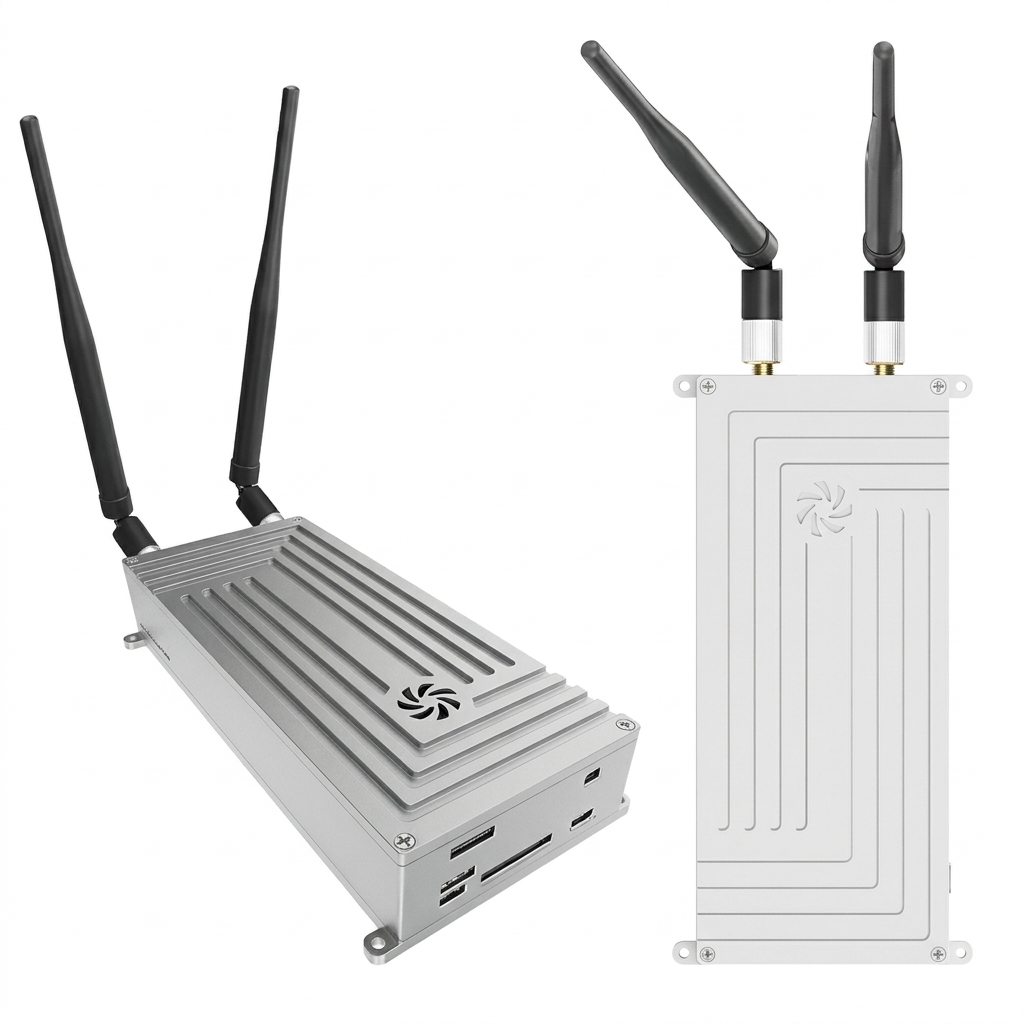
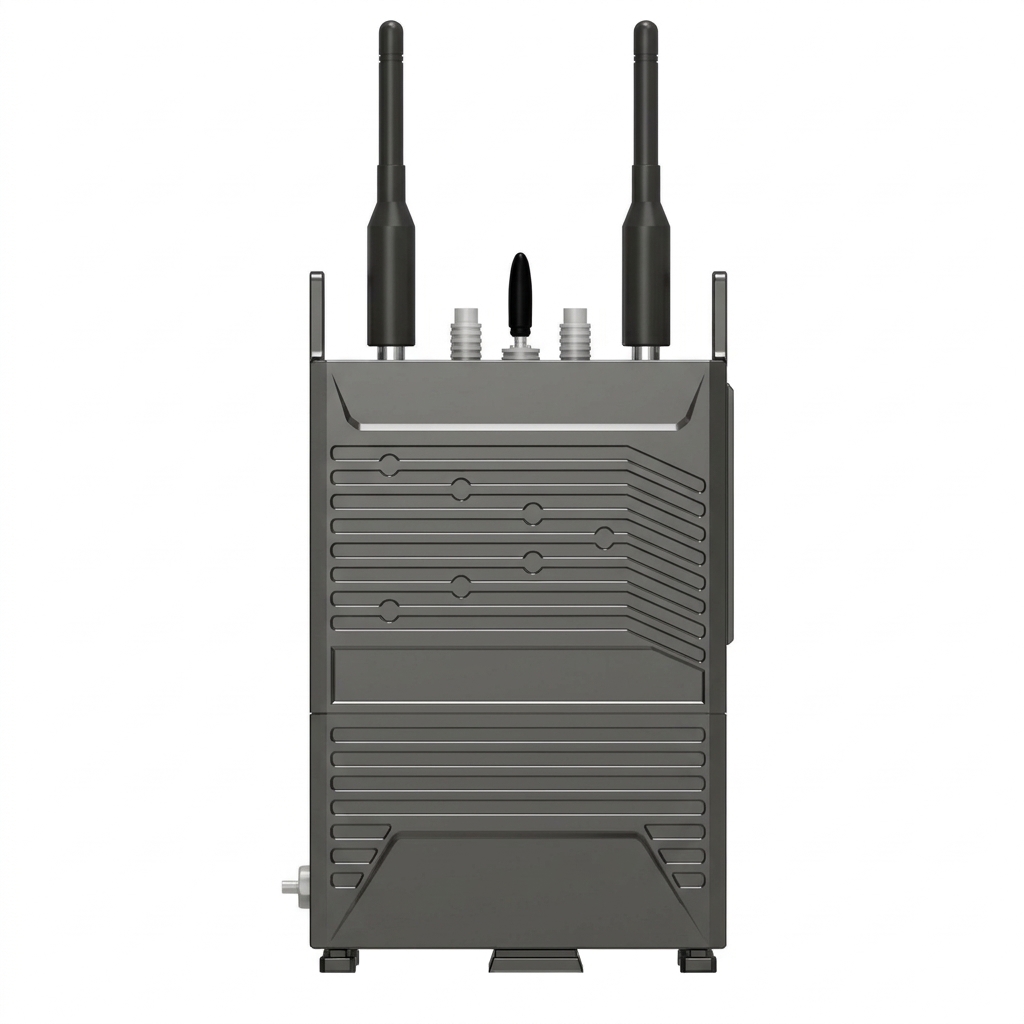
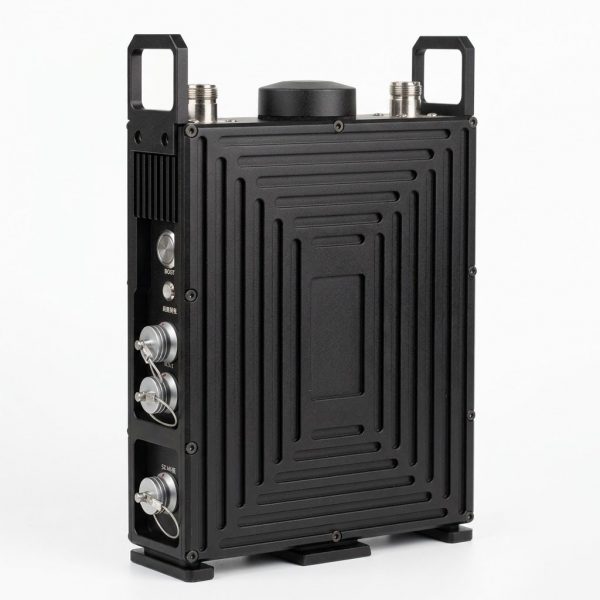
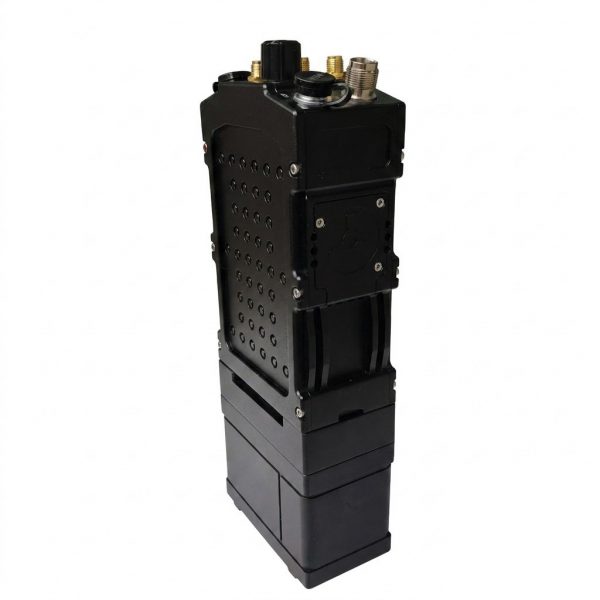
Handheld models trade power for portability and are the entry point for a team that needs to stay connected on the move. Manpack units carry a larger battery and antenna and are what you deploy when the team is on foot for a full shift. Vehicle units have the power budget and the ground plane to act as mobile relay nodes. Base station models anchor the network at a fixed high point. The camera node is the special case: a PTZ camera with the mesh radio built in, so a video feed enters the network without a separate transmitter, an encoder and two power supplies.
All of them share the same routing layer, so a network can mix handhelds, vehicles and a base station without gateways or configuration mismatch. That is the practical argument for buying the whole deployment from one range rather than assembling it from several vendors.
5. Deployment notes
Antenna height dominates everything. Doubling antenna height on both ends can add more usable range than quadrupling transmit power, and it costs nothing in battery. On a vehicle, a roof mount with a proper ground plane is worth more than a bigger amplifier.
Frequency planning beats power. In a multi-node deployment, adjacent nodes on the same channel contend with each other; assigning two or three channels across the network improves throughput more than raising power. The dual-band models (1437 MHz plus 1270 MHz, for example) exist so that a backbone link and local access can run on separate frequencies.
Power budget. A 10 W RF stage at 30% duty cycle draws far more than its average suggests. Size batteries for the transmit burst, and remember that in a relay role the duty cycle goes up because the node is forwarding other people's traffic.
Position reporting. Mesh networks are managed by topology, not by IP address. Confirm that the management software your control room already uses can read the node table from these units before you commit — integration at the management layer is where most projects lose time.
6. Frequently asked questions
How is this different from Wi-Fi mesh?
Wi-Fi mesh still needs a wired backhaul somewhere and its nodes are access points. These units form an independent network with no infrastructure at all: every node is a router, the topology is peer-to-peer, and the network exists as long as two units can hear each other.
What happens when a node fails?
The remaining nodes detect the loss of a neighbour and recompute routes. Traffic that was transiting the failed node is re-routed over surviving links, which is why multi-hop networks are deployed with more nodes than the minimum path requires.
Can it carry video?
Yes, within the data rate of the model. A 1080p stream at 4–6 Mbps fits comfortably in a 25 Mbps link; the constraint appears when several streams share one hop, or when a stream crosses multiple relays and each relay halves the available throughput.
Are custom frequencies available?
Yes. Several models are specified with a 70 MHz to 6 GHz tuning range and 1 Hz steps, subject to your frequency assignment. Tell us the assignment and the required channel plan and we will confirm which platform fits.
Can units be branded or integrated into our own enclosure?
Yes. Board-level supply, custom enclosure, branded firmware and custom connector sets are all available from defined volumes — see the OEM / ODM programme.
7. Read next
For the routing and topology background, read the MANET mobile ad-hoc network guide. For the board-level products these units are built on, see wireless networking boards; for the point-to-point microwave alternative, see industrial wireless network.