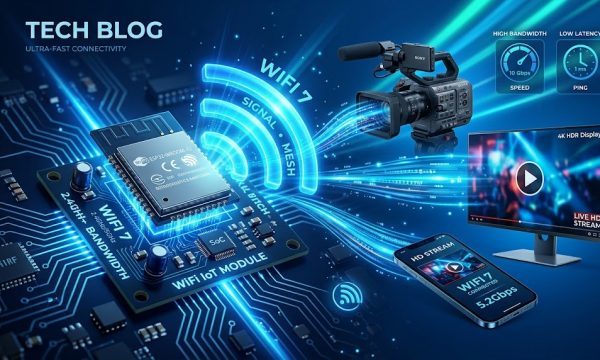
Differences Between Wireless Bridges and Wireless Video Transmission Devices: A Full-Scenario Selection Guide Based on Zukaka Qualcomm QCA Series WiFi Modules
An in-depth analysis of the essential differences between wireless bridges and wireless video transmission, providing a selection guide for WiFi-IP video transmission and COFDM solutions based on Zukaka Qualcomm QCA series WiFi modules, covering four major scenarios including surveillance, vehicular, and UAV, with SRRC/CE/FCC certification key points and RF test parameters
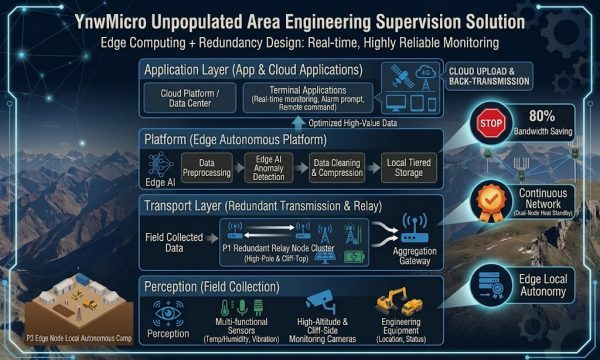
Remote-Site Major Project Supervision: 1.4G Mesh Multi-Hop Networking for Public-Network-Free Construction Camps
Remote power line/substation/mining/tunnel construction sites have no public network; a deep-dive into the 1.4GHz Mesh four-layer architecture: sensing, multi-hop ad-hoc transport, edge-computing platform, and AI-driven application. Includes node configuration, power schemes, redundancy design, and dedicated power/mining plans. Primary Keyword: Mesh Ad-Hoc Networking for Unmanned Zones
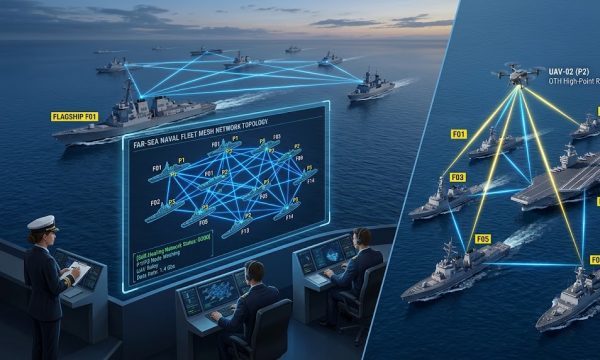
Maritime Rescue & Ship Squadron Communication Solution: 1.4G Mesh Anti-Multipath Beyond-Line-of-Sight Networking 50-150km
Maritime rescue & ship squadron communication solution: the 1.4G Mesh ad-hoc network resists sea-surface multipath and Doppler, extends 50-150km via multi-hop relays, the flagship connects to shore via satellite, COFDM+MIMO diversity stabilizes the link; covers link budget, band selection, deployment essentials and risk countermeasures
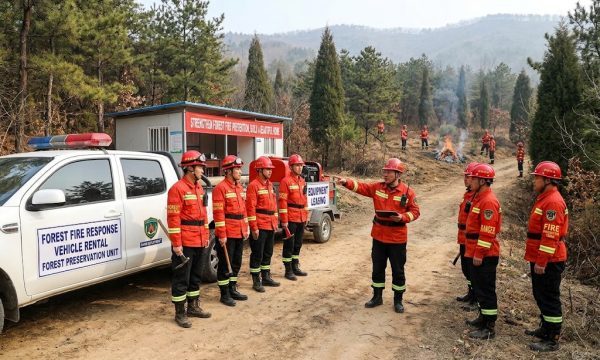
Forest Fire Prevention Command & Dispatch System: In High Mountains and Dense Forest, a 1.4G Mesh Weaves a Visible Prevention-and-Control Network
With no public network in forest areas and mountain occlusion, how forest fire prevention uses a command platform + backpack-mount 1.4G Mesh for visual monitoring and command dispatch; more critically, how it backs up offline communications and a human-machine closed loop for patrol personnel, addressing the concealed ignition sources that are over 90% human-caused. Includes the Muli "triple-outage" verification and the Yajiang fire real case
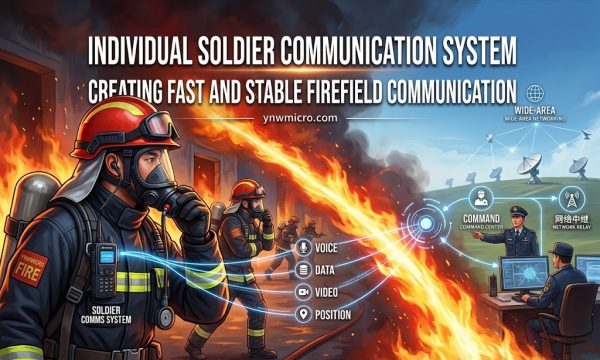
Fire-Rescue On-Site Command & Firefighter Communications Solution: Get Into the Fire, Get the Video Back
A fire command vehicle sets up the forward command post, a tethered drone expands coverage, backpack radios reach forward, and firefighters push deep. 1.4G Mesh gives the fire service "call-and-you're-through" and real-time backhaul of incident video. Covers the Jishishan and urban fire service real cases
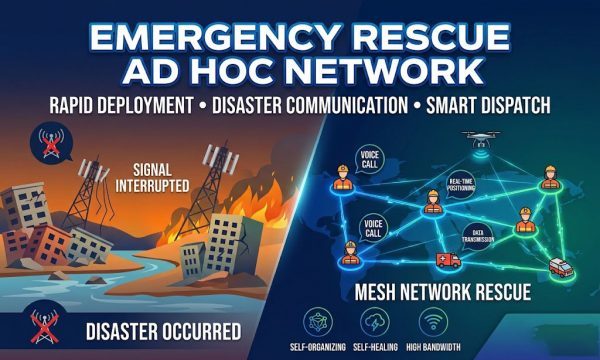
Emergency Rescue & Earthquake Relief Wireless Communication Solution: When the Public Network Fails, 1.4G Mesh Carries the On-Site Network
When the public network and base stations fail during disasters involving disruption of roads, networks and power, an emergency rescue ad-hoc network can be built using backpack, vehicle and handheld 1.4G Mesh nodes. Covers environmental characteristics, interoperability, spectrum compliance, deployment considerations and real cases from Luding, Muli, Yajiang and Jishishan.
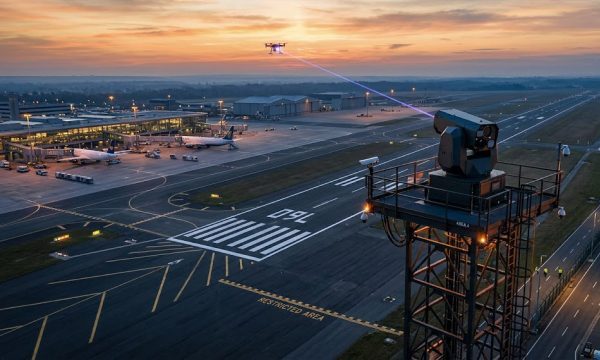
High-Energy Laser Drone Defense System: A Complete Guide to C-UAS Laser Striking
Why counter-drone teams choose high-energy laser strike systems over jammers. Real 1080nm/3kW specs, 50-500m engagement range, and the operational pain points they solve for critical-infrastructure security.
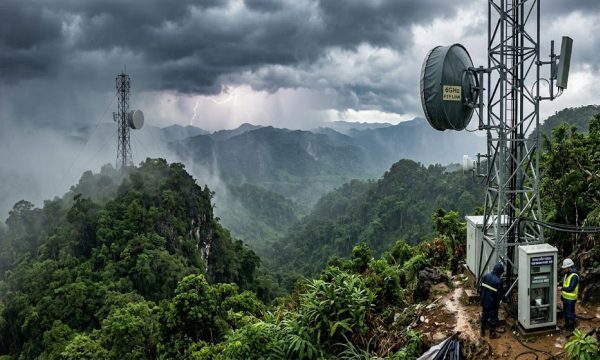
Vietnam Complex Terrain Industrial Wireless: 6GHz Bridge Deployment Guide for Tropical Rainforest and Mountainous Areas
6GHz industrial wireless bridge deployment solution tailored for Vietnam's tropical rainforests, mountainous terrain, and monsoon season. Covers vegetation attenuation calculation, relay strategies, lightning protection design, and three typical scenario case studies to support long-distance data communication in Vietnam's mining, agriculture, and security sectors.
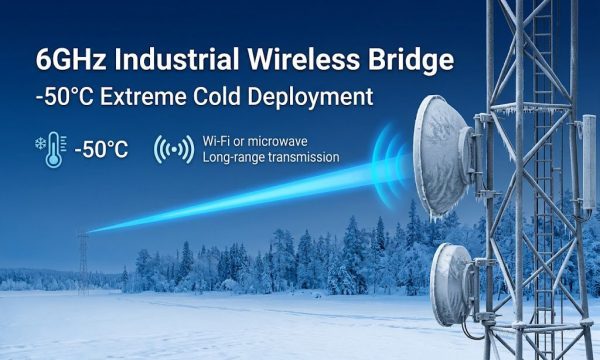
Industrial Wireless Communication in Siberia’s Extreme Cold: -50°C Long-Range 6GHz Bridge Deployment Guide
A tailored 6GHz industrial wireless bridge deployment solution for the extreme cold environments of Siberia and the Russian Far East. Covers -50°C equipment selection, permafrost tower foundations, ice and snow attenuation calculations, winter construction guidelines, and three typical use case scenarios for oil & gas, mining, and telecom long-range communications.
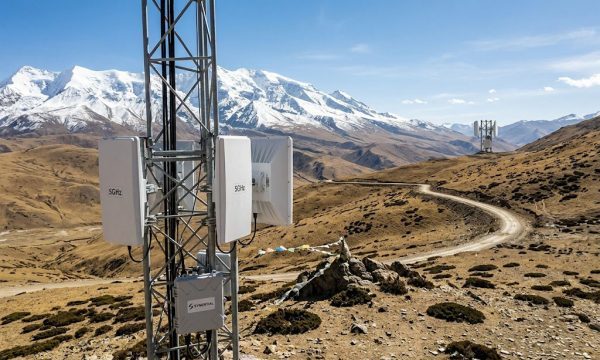
Western China Highland Long-Distance Wireless Communication Solution: 5GHz Bridge Deployment Guide for Xinjiang & Tibet
A 5GHz industrial wireless bridge deployment solution tailored for high-altitude regions in Western China (Xinjiang, Tibet). Covers equipment selection for elevations 4000m+, RF propagation characteristics in thin air, permafrost construction, solar backup power systems, and three typical use cases—border surveillance, mining, and pastoral broadband—supporting Western infrastructure development.

Industrial Wireless Bridge Band Selection Guide: 6GHz vs 5GHz Deep Dive (600MHz Spectrum Advantage)
6GHz delivers 10-15dB lower noise floor, 30+ non-overlapping channels, and zero DFS constraints — pushing link availability from 99.0% on 5GHz to 99.9% and above.
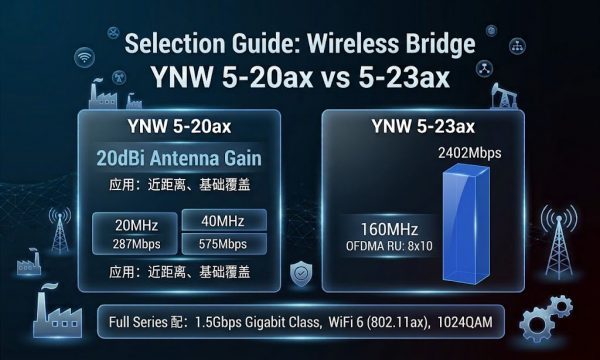
WiFi6 5G Industrial Wireless Bridge Selection Guide: YNW 5-20ax vs YNW 5-23ax (1.5Gbps Gigabit-Class)
YNW 5-20ax and YNW 5-23ax share the same 802.11ax core platform. The antenna gain differs by only 3dBi (20dBi vs 23dBi), but the 5-23ax delivers 19% more range and 50-100% higher long-distance throughput with its 6° ultra-narrow beam.